Lawrence, KS · Douglas County
Basement Water Removal in Lawrence, KSEmergency Basement Flooding & Basement Floor Water Damage
After a burst pipe or storm, Basement Water Removal in Lawrence means basement water pump out, basement wall drying and basement drying services.
Answered 24/7
Expert Basement Water Removal in Lawrence, Eudora, Linwood and Tonganoxie
Basement Water Removal in Lawrence starts with safety. Water near the furnace, water heater or electrical panel can be dangerous, so power is made safe before anyone steps into it.
In Lawrence, when a basement or below-grade room takes on water, it usually follows heavy rain, a sewer backup or a burst pipe. Local water damage pros serve Lawrence, Eudora, Linwood and Tonganoxie, pumping water out and drying the space.
Specialized Basement Water Removal for Lawrence
Emergency Basement Flooding
A flooded basement threatens the furnace, water heater and anything stored on the floor. Fast pumping protects what can still be saved.
Basement Floor Water Damage
Flooring that buckled or swelled is removed. Tile and sealed concrete can often be cleaned and dried in place.
Basement Drying Services
Drying plans for basements account for cool air and thick concrete, which hold moisture longer than upper floors.
Basement Dehumidification
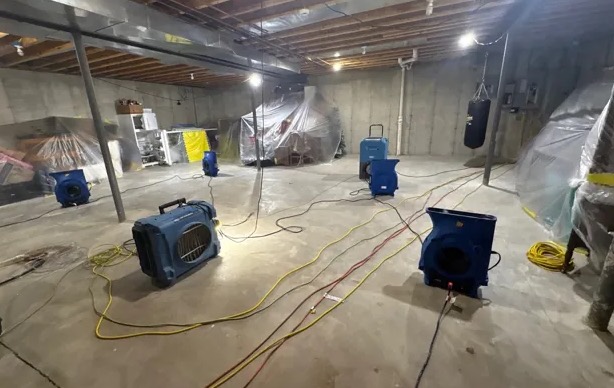
Dehumidifiers run continuously during drying, and their output is checked to track how much water is still coming out of the materials.
Basement Moisture Inspection
An inspection shows how high water wicked up the walls and how far it spread under flooring, which sets the drying plan.
Indicators You Need Professional Water Removal
High Humidity and Condensation
Water on pipes and windows, or a constantly clammy feel, means basement humidity is too high.
Rusted Appliances or Furniture
Rust on appliance bases, furniture legs or metal shelving points to standing water or long-term dampness.
Warped or Buckling Flooring
Flooring that buckles, lifts or feels spongy has water trapped between it and the slab.
Water Stains on Walls or Ceiling
Stains on lower walls or the ceiling below a bathroom or kitchen point to a leak.
How Basement Water Removal Works in Lawrence
Step 1: Emergency Water Extraction
Power is made safe, then pumps and extractors remove standing water from the basement floor.
Step 2: Detailed Moisture Inspection
Meters map wet walls, framing and slab areas, including behind finished walls and under flooring.
Step 3: Drying and Dehumidification
Air movers and large dehumidifiers run continuously, with readings checked every day.
Step 4: Final Verification and Monitoring
Readings are compared to dry areas, and equipment is removed only when the basement tests dry.
Sources of Basement Water Problems
Plumbing Leaks or Pipe Bursts
Supply lines, drain pipes and water heaters in the basement can leak or burst onto the floor.
Appliance Malfunctions and Overflows
Washers, utility sinks and water softeners in the basement can overflow or leak.
Sump Pump Malfunction or Power Loss
A sump pump that fails mechanically or loses power during a storm lets groundwater rise.
High Water Table and Hydrostatic Pressure
A high water table presses groundwater against the slab and walls, forcing it inside.
House and Business Basement Water Removal in Lawrence
Residential Basement Water Removal
Older homes with a basement may see seepage with every heavy storm. Water removal handles the current damage, and the entry point is noted for a waterproofing contractor.
Commercial Basement Water Removal
Multi-unit buildings with shared basements need each storage and laundry area pumped, dried and documented for the property manager.
Basement Water Removal vs. DIY: When to Call the Pros
You can move belongings up off the floor and run the dehumidifier you already own. Drying soaked walls and slab needs larger equipment and readings to confirm the job is done.
Investing in Professional Basement Water Removal
In Lawrence, the drying phase usually costs more than the pumping, because basements need equipment running for several days.
Basement Square Footage
Larger basements need more extraction, more drying equipment and more days of drying.
Contamination Level
Sewage or dirty water needs protective gear, removal and disinfection, which costs more.
Access and Complexity
Narrow stairs, low ceilings and crowded storage areas make the work slower and longer.
Does Insurance Cover Basement Water Removal?
Coverage for basement water removal depends on the water source and your policy. The pros document the damage and drying, and your insurer decides what is covered.
Benefits of Hiring Local Pros for Basement Water Removal in Lawrence
Moisture Inspection
Meters and thermal cameras find water in walls, floors and slab that looks dry.
Focus on Drying Outcomes
Drying continues until readings are normal, not just until surfaces look dry.
Advanced Drying Equipment
Pumps, extractors and large dehumidifiers remove water much faster than household tools.
Emergency Basement Water Removal Available 24/7
Basement taking on water in Lawrence? Make power safe if you can, move what you can and call (816) 355-6039. Help is available 24/7.
Call Now (816) 355-6039Communities Served for Basement Water Removal
Nearby areas served for basement water removal include Eudora, Linwood and Tonganoxie, with the same pumping and drying steps used in Lawrence.
- Basement Water Removal in Eudora
- Basement Water Removal in Linwood
- Basement Water Removal in Tonganoxie
- Basement Water Removal in Clearview City
- Basement Water Removal in Baldwin City
- Basement Water Removal in De Soto
- Basement Water Removal in Edgerton
- Basement Water Removal in Bonner Springs
- Emergency Damage Restoration in 66044
- Storm Damage Restoration in 66044
- Water Damage Restoration in 66044
- Water Extraction Service in 66044
- Water Leak Detection in 66044
- Water Removal Service in 66044
- Emergency Damage Restoration in 66045
- Storm Damage Restoration in 66045
Frequently Asked Basement Water Removal Questions
What causes basement floor water damage?
Storm seepage, burst pipes, appliance leaks, foundation cracks and sewer backups through floor drains are the usual sources.
Why is basement dehumidification important after pumping?
Walls and concrete keep releasing moisture for days. Dehumidifiers remove it so the basement does not stay damp.
How is basement wall drying done?
Wet drywall is cut back, insulation removed and directed airflow and dehumidifiers dry the studs and masonry.
What is involved in basement leak cleanup?
Stopping the leak, extracting the water, drying the floor and walls and checking for hidden moisture under flooring.
What is emergency basement flooding response?
Help any hour to make power safe, stop the source, pump out water and start drying before more damage sets in.