Butler, MO · Bates County
Basement Water Removal in Butler, MOBasement Dehumidification & Basement Drying Services
Get basement water removal in Butler for emergency basement flooding, basement water pump out and basement floor water damage.
Answered 24/7
Local Basement Water Removal Services for Butler
Basement Water Removal in Butler starts with safety. Water near the furnace, water heater or electrical panel can be dangerous, so power is made safe before anyone steps into it.
Homeowners in Butler can call (816) 355-6039 day or night when the basement is taking on water. Service also covers Adrian, Archie and Appleton City, with the same pumping and drying steps.
Basement Water Removal Services in Butler
Basement Dehumidification
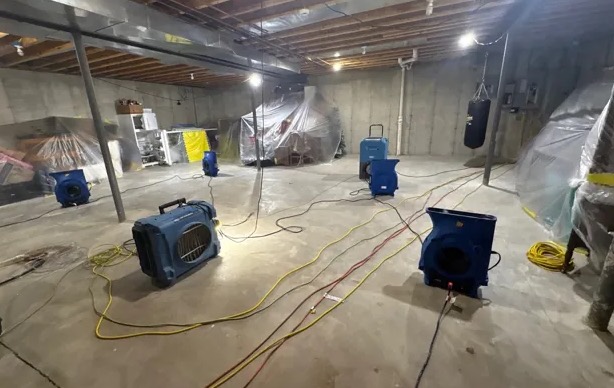
Large dehumidifiers pull moisture from basement air, which lets walls, framing and the slab release the water they absorbed.
Basement Drying Services
After pumping, air movers and dehumidifiers dry the walls, framing and slab. Readings are taken daily until every surface is back to normal.
Basement Floor Water Damage
Water on a basement floor soaks into carpet pad, laminate seams and the concrete itself. Floor coverings are lifted where needed so the slab can dry.
Basement Moisture Inspection
Readings are recorded at each visit, giving you and your insurer a clear record of the drying.
Basement Water Pump Out
A pump-out removes standing water from the basement with submersible pumps, discharging it outside and away from the foundation.
When to Call for Basement Water Removal in Butler
Efflorescence on Concrete Walls
White, powdery deposits on concrete walls mean water is passing through the masonry.
Wet or Damp Basement Walls
Basement walls that look dark, feel damp or show tide lines are taking on or holding water.
Mold or Mildew
Dark spots on drywall, framing or stored items mean the area has stayed wet for days.
Sump Pump Failure or Overflow
A sump pit that is full, overflowing or has a pump that will not start means water is about to spread.
How Basement Water Removal Works in Butler
Step 1: Emergency Water Extraction
Power is made safe, then pumps and extractors remove standing water from the basement floor.
Step 2: Detailed Moisture Inspection
Meters map wet walls, framing and slab areas, including behind finished walls and under flooring.
Step 3: Drying and Dehumidification
Air movers and large dehumidifiers run continuously, with readings checked every day.
Step 4: Final Verification and Monitoring
Readings are compared to dry areas, and equipment is removed only when the basement tests dry.
Common Causes of Basement Water Damage in Butler
Heavy Rainfall and Storm Flooding
Heavy rain saturates the soil and pushes water through walls, cracks and the floor joint.
Plumbing Leaks or Pipe Bursts
Supply lines, drain pipes and water heaters in the basement can leak or burst onto the floor.
Window Well Leaks and Drainage
Window wells without drains or covers fill with rain and leak through the windows.
Improper Landscape Grading
Soil that slopes toward the house directs rainwater straight to the basement walls.
Basement Water Removal for Homes and Businesses
Residential Basement Water Removal
Older homes with a basement may see seepage with every heavy storm. Water removal handles the current damage, and the entry point is noted for a waterproofing contractor.
Commercial Basement Water Removal
Multi-unit buildings with shared basements need each storage and laundry area pumped, dried and documented for the property manager.
When to Hire Local Pros for Basement Water Removal
Checking appliance hoses and extending downspouts away from the house are good DIY steps before storm season. Once the basement floods, call (816) 355-6039 for help.
Factors Affecting Basement Water Removal Cost
A basement pumped out the same day in Butler usually needs less drywall and flooring replaced than one left wet for days.
Time of Service
Night, weekend and storm calls can cost more than a scheduled weekday visit.
Contamination Level
Sewage or dirty water needs protective gear, removal and disinfection, which costs more.
Basement Square Footage
Larger basements need more extraction, more drying equipment and more days of drying.
Does Insurance Cover Basement Water Removal?
Ask your adjuster early how your policy treats seepage and sewer backups, since many policies limit or exclude both kinds of water.
Benefits of Hiring Local Pros for Basement Water Removal in Butler
Industry Drying Standards
Water removal and drying follow industry water damage standards, with readings at every visit.
Post-Service Moisture Verification
Final readings are recorded before equipment leaves, so you know the basement is dry.
Focus on Drying Outcomes
Drying continues until readings are normal, not just until surfaces look dry.
Round-the-Clock Basement Water Removal for Butler
If water is near outlets, the furnace or the electrical panel, stay out of it. Call (816) 355-6039 for help in Butler and wait for power to be made safe.
Call Now (816) 355-6039Communities Served for Basement Water Removal
The places below are also served, and each one has its own page.
- Basement Water Removal in Adrian
- Basement Water Removal in Archie
- Basement Water Removal in Appleton City
- Basement Water Removal in Drexel
- Basement Water Removal in Harrisonville
- Basement Water Removal in Clinton
- Basement Water Removal in Louisburg
- Basement Water Removal in Peculiar
- Emergency Damage Restoration in 64730
- Storm Damage Restoration in 64730
- Water Damage Restoration in 64730
- Water Extraction Service in 64730
- Water Leak Detection in 64730
- Water Removal Service in 64730
Answers to Top Basement Water Removal Queries
What is involved in basement water removal?
Making power safe, pumping out standing water, extracting floors and carpet, removing soaked materials and dehumidifying until dry.
What should I do right after basement flooding?
Make power safe, avoid sewage, move belongings above the water, take photos and call for water removal.
How is contaminated water handled in a basement?
With protective gear, containment, removal of porous materials and disinfection of hard surfaces before drying.
How is basement wall drying done?
Wet drywall is cut back, insulation removed and directed airflow and dehumidifiers dry the studs and masonry.
What is involved in basement leak cleanup?
Stopping the leak, extracting the water, drying the floor and walls and checking for hidden moisture under flooring.