Linwood, KS · Leavenworth County
Basement Water Damage Restoration in Linwood, KSBasement Water Extraction & Basement Wall Drying
Basement Water Damage Restoration in Linwood runs from basement water extraction and basement floor water removal to basement dehumidification.
Answered 24/7
Expert Basement Water Damage Restoration Serving Linwood
Water in a basement does not stay on the floor. It wicks up drywall, soaks insulation and seeps into wood framing. In Linwood, a few inches of water can damage walls up to two feet high.
One burst pipe or heavy storm in Linwood can flood a basement. Local water damage pros serve Linwood and nearby De Soto, Clearview City and Eudora, with help available around the clock.
Basement Water Damage Restoration Solutions Available in Linwood
Basement Water Extraction
Basement water is removed before drying starts, because every gallon left behind keeps the walls and air damp.
Basement Wall Drying
Wet drywall is cut back above the water line when it is soaked, and the wall cavity and insulation behind it are dried or replaced.
Basement Mold Prevention
After drying, an antimicrobial can be applied to framing and concrete that were wet, to slow mold on surfaces that stay in place.
Emergency Basement Flood Cleanup
Emergency cleanup starts with stopping the source where possible, checking for electrical hazards and pumping out the water.
Basement Floor Water Removal
Water on a concrete floor is squeegeed and extracted, and floor coverings such as carpet, vinyl or laminate are lifted to dry the slab.
How to Know You Need Basement Water Damage Restoration in Linwood
Mold on Surfaces
Dark spots on drywall, framing or stored boxes mean the area has stayed wet for days.
Peeling Paint or Wallpaper
Paint that peels or blisters on basement walls often has moisture behind it.
Sewage Odors or Backups
Sewage smells or water coming up through a floor drain mean the sewer line is backing up.
Damp or Musty Odors
A damp, earthy or musty smell in the basement often means hidden moisture in walls, carpet or the slab.
How Basement Water Damage Restoration Works in Linwood
Step 1: Floodwater Pump-Out
Submersible pumps remove deep water, and electrical hazards are checked before anyone walks in it.
Step 2: Deep Moisture Extraction
Extractors pull water from carpet, pad and the concrete floor after the deep water is gone.
Step 3: Air Circulation and Drying
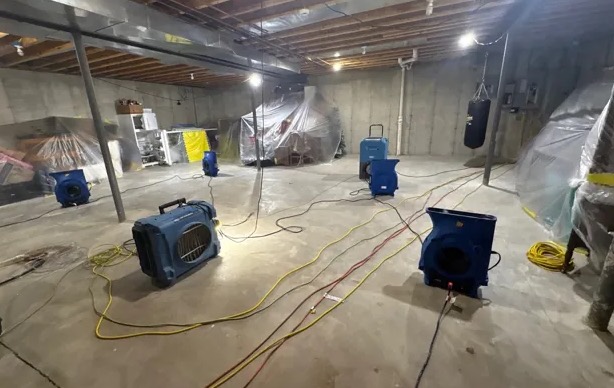
Air movers keep dry air moving across walls and floors throughout the basement.
Step 4: Dehumidification and Verification
Dehumidifiers run until humidity and material readings confirm the basement is dry.
Frequent Sources of Water Damage in Linwood
Overland Flooding From Storms
Heavy storms and snowmelt can send surface water into basements through doors and walls.
HVAC Condensate Line Overflow
A clogged furnace or air conditioner condensate line can overflow onto the floor of a basement or lower-level utility room.
Water Heater or Appliance Leaks
Water heaters, washers and utility sinks in the basement can leak or fail without warning.
Sump Pump Mechanical Failure
A sump pump that fails, loses power or is too small lets groundwater rise into the basement.
Both Residential & Commercial Basement Water Damage Restoration in Linwood
Residential Basement Water Damage Restoration
Finished basements used as living space need carpet, pad and lower drywall checked carefully. Soaked materials are removed so the walls and slab can dry.
Commercial Basement Water Damage Restoration
Businesses with below-grade storage need inventory moved out of the water quickly. Wet stock is separated and documented for insurance.
Basement Water Damage Restoration vs. DIY: When to Call the Pros
If a small leak left a puddle on bare concrete, a wet vac and a dehumidifier may be enough. Call local water damage pros if water reached drywall, carpet or framing, or if it came from a sewer drain.
Understanding Basement Water Damage Restoration Pricing in Linwood
The cost of basement water damage restoration in Linwood depends on how much water there is, whether it is clean or sewage and how much finished material must be removed.
Water Category
Clean water costs less to handle than sewage, which needs protective gear, removal and disinfection.
Material Saturation
Finished basements with carpet, drywall and insulation take more removal work than bare concrete.
Emergency Service
Night, weekend and storm calls can cost more than a scheduled visit.
Does Insurance Cover Basement Water Damage Restoration?
Flood damage from rising outside water usually needs flood insurance. Water from inside the home, like a broken pipe, is more often covered.
Why Choose Local Pros for Basement Water Damage Restoration in Linwood
Detailed Documentation
Photos, readings and drying logs are kept to support your insurance claim.
Industry Drying Standards
Drying follows industry water damage standards, with readings taken at every visit.
Mold Prevention Focus
Fast drying is the main way to limit microbial growth in a below-grade space.
Round-the-Clock Emergency Basement Water Damage Restoration in Linwood
Water rising in your basement in Linwood? Shut off power to the basement if it is safe, move what you can and call (816) 355-6039. Help is available 24/7.
Call Now (816) 355-6039Basement Water Damage Restoration Near Linwood: Areas Served
Besides Linwood, the pros handle basement pumping, drying and dehumidification in nearby De Soto, Clearview City and Eudora.
- Basement Water Damage Restoration in De Soto
- Basement Water Damage Restoration in Clearview City
- Basement Water Damage Restoration in Eudora
- Basement Water Damage Restoration in Tonganoxie
- Basement Water Damage Restoration in Bonner Springs
- Basement Water Damage Restoration in Basehor
- Basement Water Damage Restoration in Lawrence
- Basement Water Damage Restoration in Olathe
- Emergency Damage Restoration in 66052
- Storm Damage Restoration in 66052
- Water Damage Restoration in 66052
- Water Extraction Service in 66052
- Water Leak Detection in 66052
- Water Removal Service in 66052
Frequently Asked Questions About Basement Water Damage Restoration
What health risks come with delayed basement flood cleanup?
Standing water and wet materials can support bacteria and microbial growth, and sewage carries contaminants that need disinfection.
Is basement floor water removal different from carpet extraction?
Yes. Bare concrete is squeegeed and dried, while carpet and pad need extraction, and the pad is usually replaced.
How is basement restoration documented for insurance?
With photos of the water level and damage, moisture readings, a list of removed materials and daily drying logs.
Does basement mold prevention need special steps after flooding?
Fast drying is the main step. Wood and concrete that stayed wet can be treated with an antimicrobial once dry.
What is the priority during emergency basement flood cleanup?
Safety first, especially electrical hazards, then stopping the source and pumping out the water as quickly as possible.