Leawood, KS · Johnson County
Basement Water Damage Restoration in Leawood, KSBasement Mold Prevention & Basement Dehumidification
Basement Water Damage Restoration in Leawood runs from basement water extraction and basement floor water removal to basement dehumidification.
Answered 24/7
Expert Basement Water Damage Restoration Serving Leawood
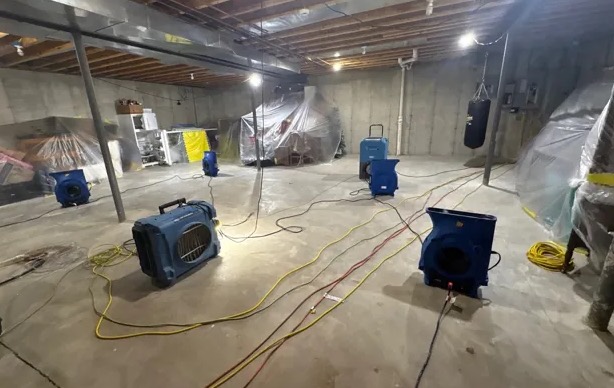
A basement dries slower than any other part of a house. The air is cool, there is little sunlight and the concrete holds moisture for a long time. In Leawood, that makes extraction and steady dehumidification important.
One burst pipe or heavy storm in Leawood can flood a basement. Local water damage pros serve Leawood and nearby Prairie Village, Mission Hills and Overland Park, with help available around the clock.
Complete Basement Water Damage Restoration for Leawood
Basement Mold Prevention
After drying, an antimicrobial can be applied to framing and concrete that were wet, to slow mold on surfaces that stay in place.
Basement Dehumidification
Large dehumidifiers pull moisture from the basement air so walls, framing and the slab can release their water.
Basement Sewer Backup Cleanup
Sewage that backs up through a floor drain or toilet is extracted with protective gear, and the area is contained from the rest of the house.
Basement Wall Drying
Wet drywall is cut back above the water line when it is soaked, and the wall cavity and insulation behind it are dried or replaced.
Emergency Basement Flood Cleanup
A flooded basement can damage furnaces, water heaters and stored items quickly. Fast pumping limits how much is lost.
How to Know You Need Basement Water Damage Restoration in Leawood
Sewage Odors or Backups
Sewage smells or water coming up through a floor drain mean the sewer line is backing up.
Efflorescence on Concrete Walls
White, chalky deposits on concrete walls mean water is moving through the concrete and leaving minerals behind.
Rusted Appliances or Pipes
Rust on the water heater, furnace base or pipes points to repeated moisture or past flooding.
Damp or Musty Odors
A damp, earthy or musty smell in the basement often means hidden moisture in walls, carpet or the slab.
How Basement Water Damage Restoration Works in Leawood
Step 1: Initial Assessment and Water Removal
The source and type of water are identified, and standing water is removed right away.
Step 2: Focused Drying of Materials
Walls, framing and the slab are dried with directed airflow, with wet insulation removed.
Step 3: Air Quality Management
Air scrubbers filter dust and odors from removal work while drying continues.
Step 4: Documentation for Restoration
Photos, readings and a list of removed materials are prepared for insurance and rebuilding.
Frequent Sources of Water Damage in Leawood
Failed or Clogged Drain Tile
Clogged or collapsed drain tile around the foundation lets water build up against the walls.
Plumbing Pipe Bursts or Leaks
Supply lines and drain pipes in basement ceilings can crack or burst onto the floor below.
HVAC Condensate Line Overflow
A clogged furnace or air conditioner condensate line can overflow onto the floor of a basement or lower-level utility room.
Foundation Cracks and Leaks
Cracks in foundation walls let groundwater and melting snow seep into the basement.
Home and Business Basement Water Damage Restoration in Leawood
Residential Basement Water Damage Restoration
A sewer backup in a home basement needs contaminated carpet, pad and drywall removed and every hard surface disinfected before drying.
Commercial Basement Water Damage Restoration
In restaurants and stores with basements, sewage backups need fast containment so contamination does not reach food or customer areas.
Professional Basement Water Damage Restoration or DIY in Leawood?
Fans alone can push damp air into the rest of the house. Basement drying needs dehumidifiers to pull the moisture out of the air and the concrete.
Understanding Basement Water Damage Restoration Pricing in Leawood
Waterproofing or sump pump replacement is a separate cost from water removal and drying. In Leawood, both may be needed to prevent a repeat.
Access Complexity
Narrow stairs, low ceilings and stored contents can make the work slower.
Affected Square Footage
Larger basements need more extraction, more drying equipment and more days of drying time.
Dehumidification Needs
Large dehumidifiers may need to run longer in below-grade spaces than in upper floors.
Does Insurance Cover Basement Water Damage Restoration?
Coverage for basement water damage restoration depends on where the water came from and your policy terms. The pros document the damage, and your insurer decides what is covered.
Reasons to Hire Local Pros for Basement Water Damage Restoration in Leawood
Advanced Moisture Detection
Moisture meters and thermal cameras find water in walls and slabs that looks dry.
24/7 Emergency Response
Help is available day or night when water is rising in the basement.
Water Type Handling
Clean water, gray water and sewage are each handled with the right protection and removal steps.
24/7 Emergency Basement Water Damage Restoration for Leawood
Water rising in your basement in Leawood? Shut off power to the basement if it is safe, move what you can and call (816) 355-6039. Help is available 24/7.
Call Now (816) 355-6039Basement Water Damage Restoration Available Throughout Johnson County
Nearby areas served for basement water damage restoration include Prairie Village, Mission Hills and Overland Park, with the same pumping and drying steps used in Leawood.
- Basement Water Damage Restoration in Prairie Village
- Basement Water Damage Restoration in Mission Hills
- Basement Water Damage Restoration in Overland Park
- Basement Water Damage Restoration in Fairway
- Basement Water Damage Restoration in Mission
- Basement Water Damage Restoration in Merriam
- Basement Water Damage Restoration in Roeland Park
- Basement Water Damage Restoration in Westwood
- Emergency Damage Restoration in 66206
- Storm Damage Restoration in 66206
- Water Damage Restoration in 66206
- Water Extraction Service in 66206
- Water Leak Detection in 66206
- Water Removal Service in 66206
- Emergency Damage Restoration in 66209
- Storm Damage Restoration in 66209
Basement Water Damage Restoration FAQs
What is the purpose of basement wall drying?
To remove water from drywall, insulation, framing and concrete so the walls can be repaired without trapping moisture.
How long does below-grade drying take after a flood?
Often several days or longer, since concrete and cool basement air dry slowly. Daily readings show progress.
What is involved in basement water damage restoration?
Pumping out water, removing soaked materials, cleaning contaminated areas, drying walls, framing and concrete, and dehumidifying until readings are normal.
What is the priority during emergency basement flood cleanup?
Safety first, especially electrical hazards, then stopping the source and pumping out the water as quickly as possible.
Why is dehumidification so important after basement water removal?
Basements hold moisture in the air and concrete. Without dehumidifiers, walls and framing stay damp long after the water is gone.