Wellsville, KS · Franklin County
Basement Water Removal in Wellsville, KSBasement Dehumidification & Basement Floor Water Damage
Basement Water Removal in Wellsville covers basement water pump out, basement wall drying and basement dehumidification after a flood.
Answered 24/7
Reliable Basement Water Removal Near Wellsville, Kansas
A basement that looks dry a day after a flood in Wellsville can still hold a lot of water in the slab, the bottom of the walls and under flooring. That hidden water causes the musty smell many basements have.
Homes in Wellsville and nearby Edgerton, Baldwin City and Gardner with basements face storm seepage, sewer backups and plumbing leaks. Help with basement water removal covers pump-out, wall and floor drying and dehumidification.
The Basement Water Removal Process in Wellsville
Basement Dehumidification
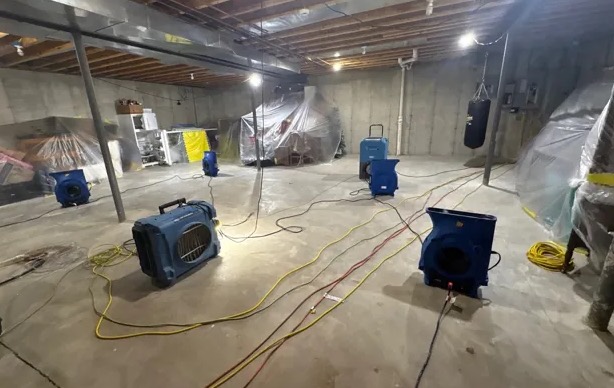
Dehumidifiers run continuously during drying, and their output is checked to track how much water is still coming out of the materials.
Basement Floor Water Damage
Concrete floors are squeegeed, extracted and dried with airflow and dehumidifiers until moisture readings drop.
Emergency Basement Flooding
Emergency response starts with making power safe, stopping the source if possible and pumping out the water.
Basement Wall Drying
Concrete and block walls dry with directed airflow and dehumidification, which pull water out of the masonry.
Basement Water Pump Out
Pumping starts once power to the basement is safe. Deep water goes first, then extractors handle the thin layer left on the floor.
Signs of Basement Water Damage in Wellsville
Gurgling Sounds From Drains
Gurgling floor drains or slow drains can be an early sign of a sewer line problem.
Soggy or Wet Carpeting
Carpet that feels damp or smells sour is holding water in the pad against the concrete.
Wet or Damp Basement Walls
Basement walls that look dark, feel damp or show tide lines are taking on or holding water.
High Humidity and Condensation
Water on pipes and windows, or a constantly clammy feel, means basement humidity is too high.
How Basement Water Removal Works in Wellsville
Step 1: Emergency Water Extraction
Power is made safe, then pumps and extractors remove standing water from the basement floor.
Step 2: Detailed Moisture Inspection
Meters map wet walls, framing and slab areas, including behind finished walls and under flooring.
Step 3: Drying and Dehumidification
Air movers and large dehumidifiers run continuously, with readings checked every day.
Step 4: Final Verification and Monitoring
Readings are compared to dry areas, and equipment is removed only when the basement tests dry.
Sources of Basement Water Problems
Appliance Malfunctions and Overflows
Washers, utility sinks and water softeners in the basement can overflow or leak.
Plumbing Leaks or Pipe Bursts
Supply lines, drain pipes and water heaters in the basement can leak or burst onto the floor.
Heavy Rainfall and Storm Flooding
Heavy rain saturates the soil and pushes water through walls, cracks and the floor joint.
Clogged or Damaged Gutters
Clogged gutters and short downspouts dump roof water right next to the foundation.
Residential and Commercial Basement Water Removal in Wellsville
Residential Basement Water Removal
In homes, a wet basement often means damaged carpet, drywall and stored belongings, plus a furnace or water heater sitting in water. Water is pumped out and the space dried.
Commercial Basement Water Removal
In commercial buildings, basements often house mechanical rooms and storage. Water is removed so systems can be checked to determine whether they can be restarted safely.
The Risks of DIY Basement Water Removal
You can move belongings up off the floor and run the dehumidifier you already own. Drying soaked walls and slab needs larger equipment and readings to confirm the job is done.
Investing in Professional Basement Water Removal
The pros look at water depth, water type and basement finishes before pricing basement water removal in Wellsville, then explain the scope.
Basement Square Footage
Larger basements need more extraction, more drying equipment and more days of drying.
Drying Time Required
Basements dry slowly, and each extra day of equipment adds to the total.
Affected Materials
Finished walls, carpet and laminate take more removal work than bare concrete.
Does Insurance Cover Basement Water Removal?
Ask your adjuster early how your policy treats seepage and sewer backups, since many policies limit or exclude both kinds of water.
The Value of Professional Basement Water Removal
Methodical Water Removal Process
Water is removed in a set order: pump-out, extraction, removal of soaked materials, then drying.
Advanced Drying Equipment
Pumps, extractors and large dehumidifiers remove water much faster than household tools.
Moisture Inspection
Meters and thermal cameras find water in walls, floors and slab that looks dry.
Round-the-Clock Basement Water Removal for Wellsville
Standing water in a basement soaks walls and floors by the hour. Call (816) 355-6039 for basement water removal in Wellsville at any time, day or night.
Call Now (816) 355-6039Basement Water Removal Serving Wellsville and Surroundings
Need basement water removal outside Wellsville? Service also covers Edgerton, Baldwin City and Gardner, including emergency help during storms.
- Basement Water Removal in Edgerton
- Basement Water Removal in Baldwin City
- Basement Water Removal in Gardner
- Basement Water Removal in Rantoul
- Basement Water Removal in New Century
- Basement Water Removal in Ottawa
- Basement Water Removal in Hillsdale
- Basement Water Removal in Paola
- Emergency Damage Restoration in 66092
- Storm Damage Restoration in 66092
- Water Damage Restoration in 66092
- Water Extraction Service in 66092
- Water Leak Detection in 66092
- Water Removal Service in 66092
Basement Water Removal FAQs
How is basement wall drying done?
Wet drywall is cut back, insulation removed and directed airflow and dehumidifiers dry the studs and masonry.
Does basement flood cleanup include mold prevention?
Fast drying is the main prevention. Wood and concrete that stayed wet can be treated with an antimicrobial once dry.
Why is basement dehumidification important after pumping?
Walls and concrete keep releasing moisture for days. Dehumidifiers remove it so the basement does not stay damp.
What should I do right after basement flooding?
Make power safe, avoid sewage, move belongings above the water, take photos and call for water removal.
Can I dry my basement myself with fans?
Fans help with surface water, but walls and concrete need dehumidifiers and readings to dry fully.