Grain Valley, MO · Jackson County
Basement Water Removal in Grain Valley, MOBasement Water Pump Out & Basement Dehumidification
Get basement water removal in Grain Valley for emergency basement flooding, basement water pump out and basement floor water damage.
Answered 24/7
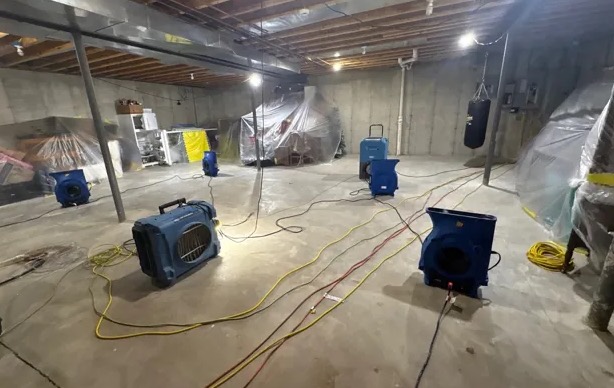
Basement Water Removal Solutions for Grain Valley Homeowners
In Grain Valley, a finished basement or lower level takes more work after a flood. Carpet, pad, laminate, drywall and insulation all trap water against the concrete and framing.
A finished basement or lower level in Grain Valley or Oak Grove, Blue Springs and Lake Lotawana can hide water under flooring and behind drywall. The pros find and remove it before it causes lasting damage.
Comprehensive Basement Water Removal Solutions
Basement Water Pump Out
Pumping starts once power to the basement is safe. Deep water goes first, then extractors handle the thin layer left on the floor.
Basement Dehumidification
Large dehumidifiers pull moisture from basement air, which lets walls, framing and the slab release the water they absorbed.
Basement Wall Drying
Concrete and block walls dry with directed airflow and dehumidification, which pull water out of the masonry.
Sump Pump Failure Water Cleanup
When a sump pump stops, groundwater spreads across the floor. The water is pumped out and the floor and lower walls are extracted.
Basement Drying Services
Equipment stays until the basement reads dry, not just until it looks dry. Removing it early lets dampness return.
Signs of Basement Water Damage in Grain Valley
Standing Water in Basement
Standing water anywhere on the basement floor needs to be pumped out before it soaks the walls.
Warped or Buckling Flooring
Flooring that buckles, lifts or feels spongy has water trapped between it and the slab.
High Humidity and Condensation
Water on pipes and windows, or a constantly clammy feel, means basement humidity is too high.
Water Stains on Walls or Ceiling
Stains on lower walls or the ceiling below a bathroom or kitchen point to a leak.
How Basement Water Removal Works in Grain Valley
Step 1: First Call and Initial Assessment
The source, the type of water and the depth are checked, and the water level is photographed.
Step 2: Bulk Water and Contaminant Removal
Pumps remove standing water, and carpet, pad or drywall touched by dirty water is removed.
Step 3: Drying With Monitoring
Dehumidifiers and air movers run around the clock, with readings logged every day on walls and slab.
Step 4: Post-Drying Evaluation and Documentation
Final readings and photos are compiled to show the basement is dry and what was removed.
Common Causes of Basement Water Damage in Grain Valley
Plumbing Leaks or Pipe Bursts
Supply lines, drain pipes and water heaters in the basement can leak or burst onto the floor.
High Water Table and Hydrostatic Pressure
A high water table presses groundwater against the slab and walls, forcing it inside.
Window Well Leaks and Drainage
Window wells without drains or covers fill with rain and leak through the windows.
Improper Landscape Grading
Soil that slopes toward the house directs rainwater straight to the basement walls.
Both Residential & Commercial Basement Water Removal
Residential Basement Water Removal
Older homes with a basement may see seepage with every heavy storm. Water removal handles the current damage, and the entry point is noted for a waterproofing contractor.
Commercial Basement Water Removal
Multi-unit buildings with shared basements need each storage and laundry area pumped, dried and documented for the property manager.
Professional Basement Water Removal Versus Do-It-Yourself
A small puddle on bare concrete can be handled with a wet vac, towels and a dehumidifier. Call local basement drying experts if water reached carpet, drywall or framing, or covers much of the floor.
Understanding Basement Water Removal Pricing
The pros look at water depth, water type and basement finishes before pricing basement water removal in Grain Valley, then explain the scope.
Access and Complexity
Narrow stairs, low ceilings and crowded storage areas make the work slower and longer.
Drying Time Required
Basements dry slowly, and each extra day of equipment adds to the total.
Contamination Level
Sewage or dirty water needs protective gear, removal and disinfection, which costs more.
Does Insurance Cover Basement Water Removal?
Ask your adjuster early how your policy treats seepage and sewer backups, since many policies limit or exclude both kinds of water.
Advantages of Local Basement Water Removal Experts
Industry Drying Standards
Water removal and drying follow industry water damage standards, with readings at every visit.
Focus on Drying Outcomes
Drying continues until readings are normal, not just until surfaces look dry.
Moisture Inspection
Meters and thermal cameras find water in walls, floors and slab that looks dry.
Emergency Basement Flood Response in Grain Valley
The faster a basement is pumped out, the more can be saved. Call (816) 355-6039 for basement water removal in Grain Valley as soon as you see water.
Call Now (816) 355-6039Local Basement Water Removal Coverage for Oak Grove, Blue Springs and Lake Lotawana
Besides Grain Valley, the experts handle basement pump-outs, wall drying and dehumidification in nearby Oak Grove, Blue Springs and Lake Lotawana.
- Basement Water Removal in Oak Grove
- Basement Water Removal in Blue Springs
- Basement Water Removal in Lake Lotawana
- Basement Water Removal in Buckner
- Basement Water Removal in Lone Jack
- Basement Water Removal in Lee's Summit
- Basement Water Removal in Independence
- Basement Water Removal in Greenwood
- Emergency Damage Restoration in 64029
- Storm Damage Restoration in 64029
- Water Damage Restoration in 64029
- Water Extraction Service in 64029
- Water Leak Detection in 64029
- Water Removal Service in 64029
Basement Water Removal in Grain Valley: Your Questions
What causes basement floor water damage?
Storm seepage, burst pipes, appliance leaks, foundation cracks and sewer backups through floor drains are the usual sources.
Is a sump pump failure an emergency?
Yes, especially during rain. Groundwater can rise quickly once the pump stops, flooding the floor and finished rooms.
What equipment is used for basement water extraction?
Submersible pumps, extractors, wet vacs, air movers, large dehumidifiers and moisture meters to confirm drying.
Can I dry my basement myself with fans?
Fans help with surface water, but walls and concrete need dehumidifiers and readings to dry fully.
What is involved in basement leak cleanup?
Stopping the leak, extracting the water, drying the floor and walls and checking for hidden moisture under flooring.